What Does "Mewing" Mean? A Parent's Guide
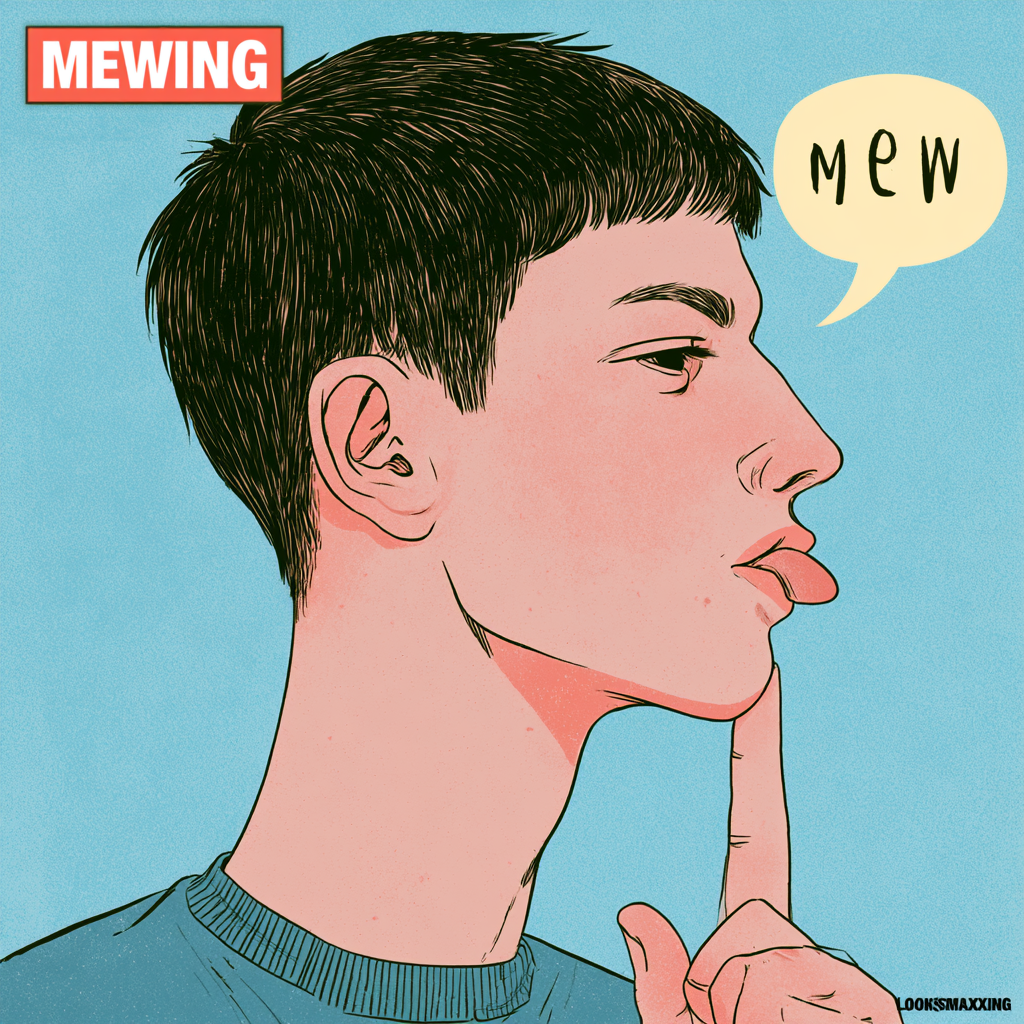
What Does "Mewing" Mean?
Mewing has two related meanings that kids use today.
- The technique: resting the tongue flat against the roof of the mouth, with lips closed and teeth lightly together, based on the claim that it can create a sharper, more defined jawline over time.
- The gesture and joke: a silent motion where someone points to their lips and runs a finger along their jaw. Kids use this to mean "I am not talking right now," to show off their jawline, or to jokingly shush someone.
So when a child says "I am mewing," they might mean they are literally holding the tongue posture, or they might be joking that they are staying silent or looking good.
You may also see "mewing" written on its own in comments or used as a caption over a silent, straight-faced video. In that form it usually just means the person is holding the pose or refusing to react, leaning into the deadpan humor the trend is known for.
| Mewing at a glance | |
|---|---|
| What it means | A tongue-posture jaw technique, or a silent "I am not talking" gesture |
| Does it work? | No strong evidence it reshapes the face |
| Where it is from | Orthodontist Mike Mew; went viral on TikTok |
| Safe for kids? | The gesture is harmless; watch the looksmaxxing content it links to |
Why Are Kids Saying "Mewing"?
Mewing exploded on TikTok and YouTube Shorts, where the hashtag has been searched and viewed billions of times. It sits inside a bigger trend called looksmaxxing, which is about trying to maximize your physical attractiveness. Short videos promise that free habits like mewing can transform your face, which is appealing to self-conscious kids and teens.
It also became a classroom and group-chat joke. Because the gesture is silent and a little cheeky, kids use it to "refuse to answer" a teacher or friend, similar to a playful shush.
The silent, deadpan nature of the joke is part of the appeal. A single gesture can get a laugh, dodge a question, or show off a jawline without saying a word, which makes it perfect for classrooms and quiet moments. That is also why teachers around the world have noticed students "mewing" instead of answering, usually more cheeky than defiant.
Examples of How Kids Use "Mewing"
- "I can't talk, I'm mewing." A joke meaning "I am staying quiet," often paired with the finger-to-jaw gesture.
- "Mew for the jawline." Encouraging someone to hold the tongue posture to look more defined.
- "He hit the mewing pose in every photo." Describing the tensed-jaw, closed-mouth look kids use in selfies.
- Teacher asks a question, student silently runs a finger along the jaw. A playful way of refusing to answer.
- "Bro thinks mewing will fix his face." Teasing a friend for taking the appearance advice too seriously.
- "Mewing streak day 30." Half-joking about keeping up the tongue posture, common in looksmaxxing videos.
Where Did "Mewing" Come From?
The word comes from Mike Mew, a British orthodontist who promoted tongue-posture techniques he and his father, John Mew, called "orthotropics." Social media users nicknamed the tongue-posture idea "mewing."
Parents should know the medical context. According to reporting on the case, the UK General Dental Council erased Mike Mew from its register in November 2024, finding that some of his treatments were not supported by strong scientific evidence and could cause harm. In short, the viral claim that "mewing will reshape your face" is not backed by solid evidence for the results people expect.
Is "Mewing" Inappropriate for Kids?
Generally: Context-dependent. The gesture and the tongue posture are not vulgar, sexual, or violent, and simply resting your tongue on the roof of your mouth is harmless. The concern is not the word, it is the surrounding trend.
Mewing is a gateway term into looksmaxxing content, some of which promotes an unhealthy fixation on appearance and, in its more extreme corners, genuinely risky ideas. The technique alone is fine. The pipeline of videos it can lead to is what is worth watching.
Should Parents Be Concerned?
A child jokingly "mewing" in photos or to avoid answering a question is nothing to worry about. It is a normal meme.
It is worth paying closer attention if mewing comes with real anxiety about their looks, constant comparison of their face or jaw to others, or a feed full of "fix your face" content. That can be a sign they are sliding from a harmless joke into appearance pressure, which is a good moment for a supportive conversation rather than a ban.
If you do want to steer things, aim your attention at the content feed rather than the habit. Watching a few of the videos your child sees, and gently questioning the "you must fix your face" message some of them push, does more good than telling them to stop a harmless pose. The goal is to build their filter, not to police a gesture.
What Parents Should Know
- Two meanings. Mewing can mean the tongue technique or a silent "I am not talking" gesture.
- The claims are unproven. There is no strong evidence that mewing reshapes a person's face, and its main promoter was removed from the UK dental register in 2024.
- It links to looksmaxxing. The term often appears alongside appearance-focused content aimed mostly at boys.
- Watch the tone, not the word. Joking is fine; genuine distress about their looks is the thing to notice.
- Keep it light. Curiosity ("show me what mewing is") works better than mockery or alarm.
- Real jaw or breathing concerns need a professional. For genuine questions about a child's bite, breathing, or teeth, a licensed dentist or orthodontist is the right source, not TikTok.
Related Slang Parents May Hear
- Looksmaxxing means trying to maximize your physical attractiveness through grooming, fitness, and sometimes extreme measures.
- Mogging means clearly out-looking or outshining someone else.
- Chad refers to an idealized, very attractive and confident man.
- Canthal tilt is a facial feature, the angle of the eyes, that looksmaxxing content obsesses over.
- Sigma describes a confident "lone wolf" male, often used ironically.
- Rizz means charm or the ability to attract a romantic interest.
- Glow up means a positive transformation in looks or confidence.
Frequently asked questions
What does mewing mean?
Does mewing actually work?
Is mewing safe for kids?
Why do kids do the mewing hand gesture?
Where does the word mewing come from?
See what YouTube is really teaching your kids
KidWatch turns your child's watch history into a plain-English safety report.
Get started