What Does "Based" Mean in Slang? A Parent's Guide
What Does "Based" Mean?
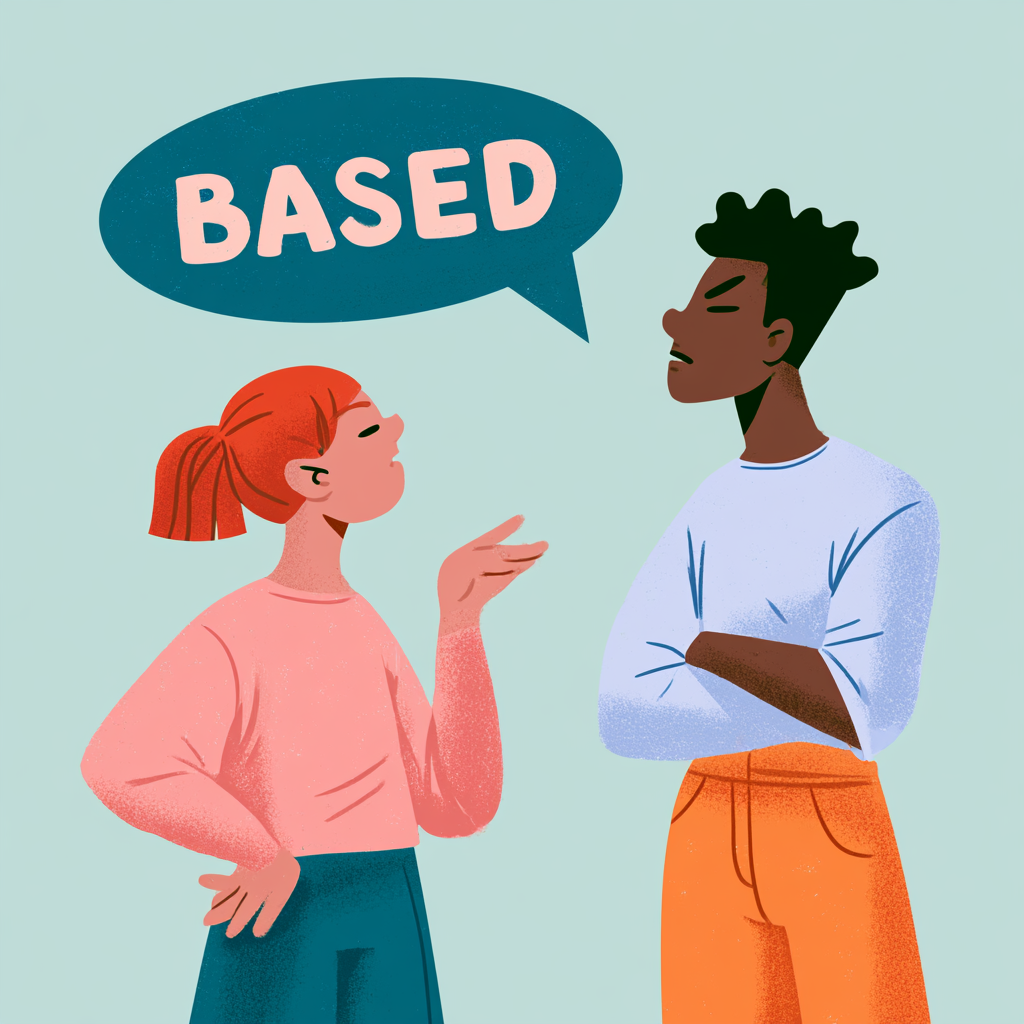
Based means being authentically yourself and unafraid to share your opinion, even if it is unpopular. When a kid calls someone or something "based," they are giving a compliment: it usually means "I respect that you are being real and standing your ground." It can also be a quick way to strongly agree with what someone just said.
You might hear it as a one-word reply. If a friend states an unpopular opinion confidently, another might simply respond "based" to show approval. It is the friendly opposite of "cringe," which mocks something as embarrassing or try-hard.
Why Are Kids Saying "Based"?
Kids like "based" because it rewards confidence and honesty. In a social media world where a lot of people follow the crowd, calling something based celebrates the opposite, having the nerve to be yourself. It is common in gaming chats, YouTube comments, Discord servers, and TikTok replies.
It is also short and versatile. A single word can praise a bold opinion, a brave choice, or just someone being unapologetically themselves, which makes it easy to drop into almost any conversation.
Examples of How Kids Use "Based"
- "You still like that band? Based." Respect for liking something without caring about others' opinions.
- "He told the teacher he thought the book was boring. Based." Admiration for being honest even when it is risky.
- "That's such a based take." Strong agreement with an opinion.
- "Wear whatever you want, stay based." Encouragement to be yourself.
Where Did "Based" Come From?
The slang use is widely credited to the California rapper Lil B, who began using "based" around 2010 to describe living positively and being yourself. He deliberately flipped the word, which had earlier been a negative reference to drug use, into something positive. Merriam-Webster documents this shift from insult to compliment.
Along the way, the term was also picked up in political corners of the internet, sometimes to praise edgy or contrarian opinions. Today most kids use it in the broad, non-political sense of authentic and confident. Because it traveled through several communities, the meaning can shift with context.
Is "Based" Inappropriate for Kids?
Generally: Harmless. Based is not profane and has no sexual or violent meaning. In everyday use it is a compliment about confidence and honesty.
The one thing to know: because the word has been used in political and edgy online spaces, it occasionally shows up praising deliberately provocative or offensive opinions. The word itself is fine; it is worth noticing what is being called based if it appears alongside heated or extreme content.
Should Parents Be Concerned?
Not by the word alone. Hearing "based" is like hearing "respect" or "well said." It is a positive term.
Pay attention only to the surrounding conversation. If based repeatedly shows up approving of mean, extreme, or hateful comments in a feed or chat, the content around it is worth a look, not the slang itself.
What Parents Should Know
- It is usually a compliment. Based praises authenticity and confidence.
- Its opposite is cringe. The two words often appear together.
- Context can shift it. Mostly harmless, but occasionally used to praise edgy opinions.
- It is a good conversation starter. A natural way to talk about peer pressure and standing up for yourself.
Related Slang Parents May Hear
Frequently asked questions
What does "based" mean in slang?
Is "based" a bad word?
What is the opposite of "based"?
Where did "based" come from?
Should I worry if my child says "based"?
See what YouTube is really teaching your kids
KidWatch turns your child's watch history into a plain-English safety report.
Get started